


Spillage and blockages on cleated conveyors: a common problem across industries
Conveyor systems play a critical role in many industrial processes. From moving waste and recyclables to transporting aggregates or metal components, reliability is essential. However, conveyors fitted with cleated or chevron belts often suffer from an overlooked but costly issue: ineffective side sealing caused by traditional rubber skirts. Across multiple industries, this leads to spillage, blockages, excessive wear and unnecessary downtime.
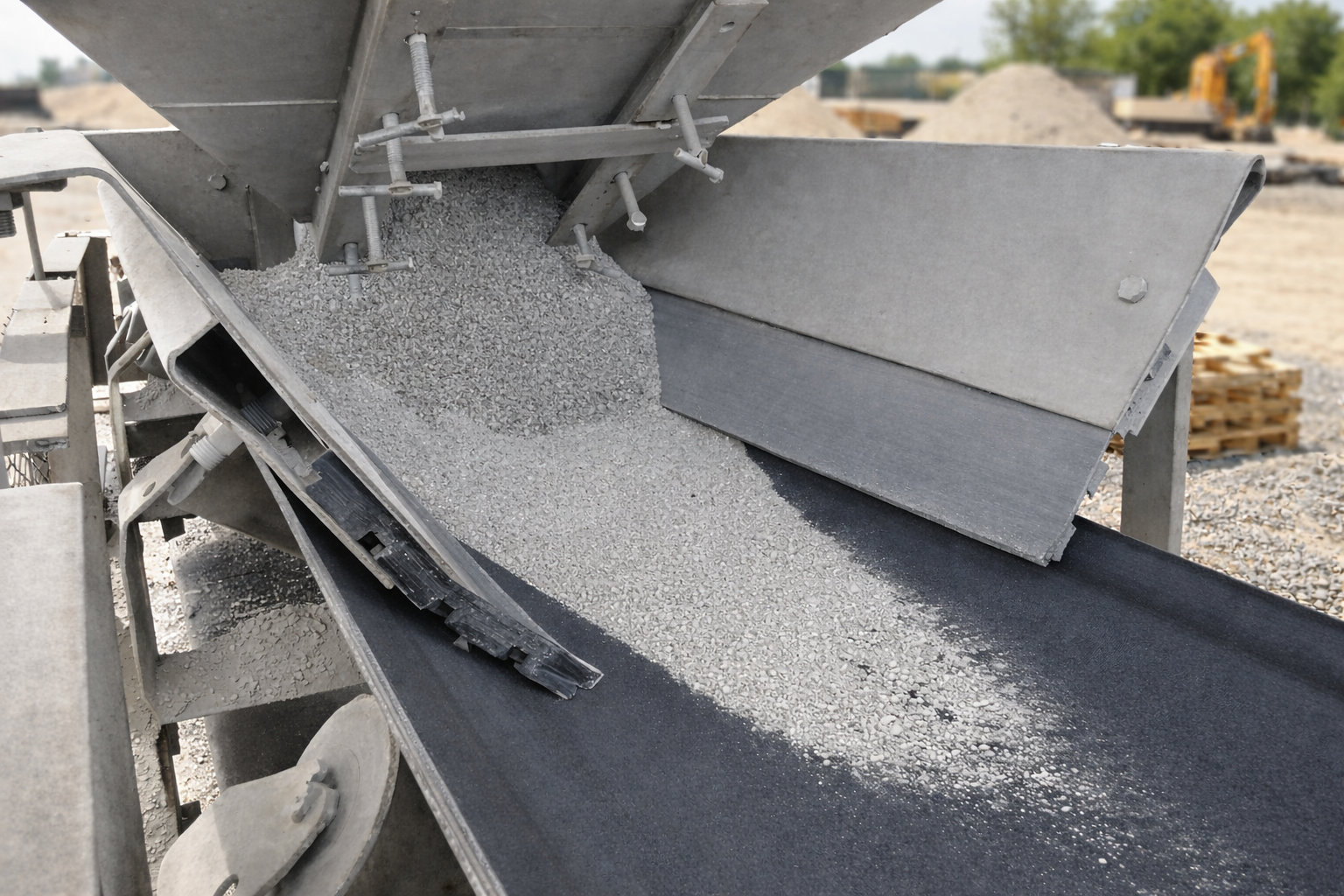
Why rubber skirts cause problems on cleated belts
Rubber skirts are commonly used to seal the sides of conveyor belts. While effective on flat belts, they struggle to cope with cleated designs. As each cleat passes, the rubber skirt is pushed upwards, creating gaps along the conveyor edge. These gaps allow material to escape underneath the skirt, where it can accumulate, become trapped or damage the belt and surrounding components.
The result is a recurring cycle of:
- Material spillage
- Conveyor blockages
- Increased belt and component wear
- Unplanned maintenance and downtime
Industry-specific challenges
Waste management
In waste processing facilities, conveyors handle mixed, abrasive and often unpredictable materials. When spillage occurs underneath rubber skirts, material builds up rapidly, increasing fire risk, causing belt misalignment and requiring frequent clean-downs. Downtime in waste management operations is costly and disruptive.
Recycling
Recycling plants rely on continuous conveyor operation to maintain throughput. Light materials such as plastics and paper easily escape through gaps created by lifted rubber skirts. This leads to contamination, material loss and increased manual intervention to clear blockages.
Packaging and logistics
In packaging environments, cleanliness and efficiency are key. Spillage around conveyor edges can interfere with downstream processes, sensors and automation systems. Rubber skirts that lift on cleated belts compromise process stability and increase maintenance requirements.
Metal and steel production
Metal and steel conveyors often operate in harsh conditions with heavy, abrasive materials. Trapped material beneath rubber skirts accelerates wear on belts, frames and rollers. Replacing damaged components leads to extended downtime and high maintenance costs.
Engineering applications
Engineering environments often use cleated belts to control product flow on inclined conveyors. Inconsistent sealing can result in product loss, reduced accuracy and premature belt wear, impacting overall system performance.
Aggregates and bulk handling
Aggregates such as sand, gravel and stone are highly abrasive. When these materials escape beneath rubber skirts, they quickly erode belts and conveyor structures. Blockages are common and cleaning is labour-intensive, especially on inclined conveyors.
A proven alternative: conveyor sealing brushes
Unlike rubber skirts, conveyor sealing brushes are designed to adapt to belt movement. Flexible, wear-resistant bristles move with the cleats, maintaining constant contact with the belt surface without being forced upwards.
This creates a continuous seal that:
- Prevents material from escaping under the conveyor sides
- Reduces wear on belts and components
- Minimises blockages and spillage
- Improves conveyor reliability across industries
CONSKIRT™: reliable sealing, available from stock
The CONSKIRT™ conveyor sealing brush is a standard, off-the-shelf solution specifically suited for cleated and chevron belt applications. Easy to install and immediately effective, it offers a practical upgrade for conveyors where rubber skirts consistently fail.
With fast delivery directly from stock, CONSKIRT™ allows operators to quickly reduce downtime and improve conveyor performance without the need for customisation.
Improving conveyor performance starts with better sealing
Spillage and blockages are not just housekeeping issues, they directly impact safety, efficiency and operating costs. Choosing the right conveyor sealing solution can make a measurable difference across a wide range of industries.
If you are experiencing recurring problems with rubber skirts on cleated conveyors, it may be time to consider a more reliable sealing approach.
Want to learn more?
Contact our team for advice, technical information or to request a sample. We’re happy to help you find the right standard solution for your conveyor application.